

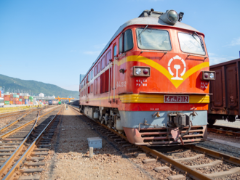





Intermodal transport serves as a cornerstone for integrating logistics corridors and enhancing trade efficiency. It is also a vital conduit for fostering regional coordination and empowering global commerce. In 2025, YANTIAN reached record highs in both rail-sea and feeder service volumes. In particular, Hong Kong-bound laden container traffic, following a nearly 30% surge in 2024, achieved further double-digit growth.
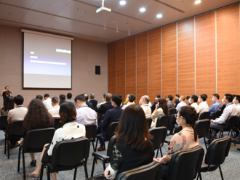
At the beginning of 2026, to express sincere appreciation for the continued trust and support of its partners, YANTIAN hosted an Intermodal Transportation Customer Communication Session. The event provided an opportunity to strengthen long-standing partnerships and jointly explore new opportunities for the future development of intermodal transport.
YANTIAN extends its heartfelt gratitude to the Shenzhen Municipal Government and the Yantian District Government, port supervisory authorities, China Railway Guangzhou Group, as well as more than 350 leaders and representatives from governments, shipping companies, inland ports, feeder operators, logistics companies, industry associations, and cargo owners from Guangdong, Sichuan, Chongqing, Hunan, Hubei, Jiangxi, and other regions, for their valued presence and support.
 Multi-stakeholder collaboration injects "certainty" into trade facilitation
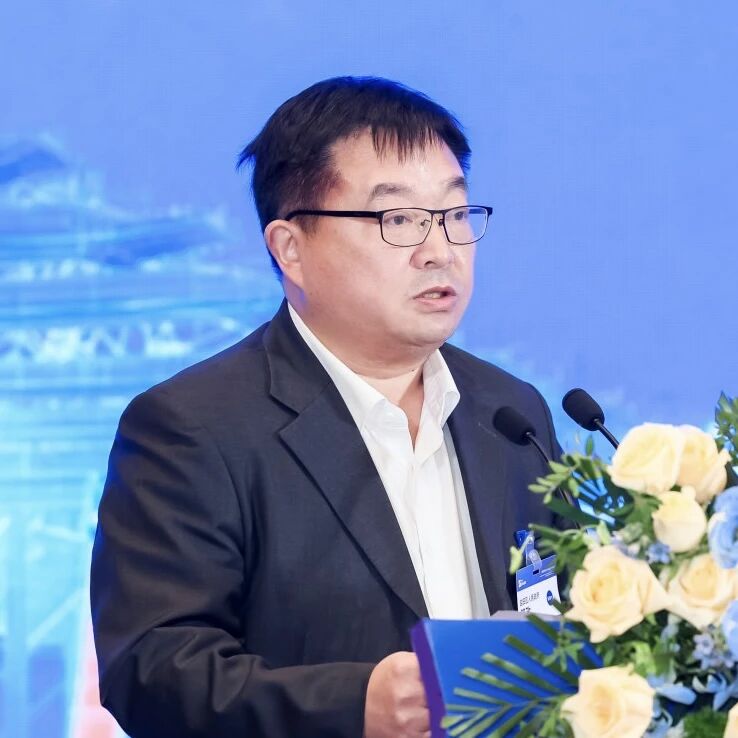 |
| Jian Zheng, Deputy District Head of Yantian District |
| Yantian District was established because of the port and has prospered through it. Anchored in a development philosophy that advances industry through trade, the district is accelerating the development of the core area of a global marine centre city. The rapid expansion of intermodal transport has become a powerful driver of port–city integration. By optimising transport structures, it has effectively alleviated traffic congestion and reduced carbon emissions. Serving as a vital connective link, intermodal transport has facilitated the clustering of port-related industries, expanded employment opportunities, promoted the deep integration of port functions with urban development, and laid a solid foundation for Yantian District's role as an international logistics hub. |
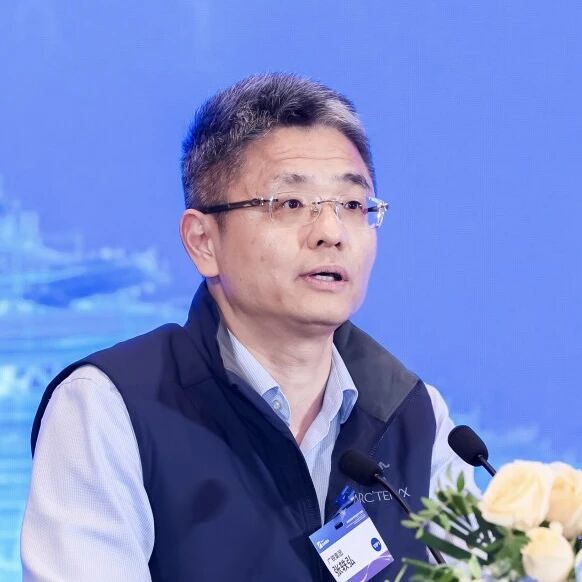 |
| Zhang Yihong, General Manager, Freight Logistics Division of China Railway Guangzhou Group |
| China Railway Guangzhou and YANTIAN have forged a 30-year, all-weather strategic partnership without operational limits, jointly building an integrated logistics system encompassing "international rail services, railway trunk corridors, and feeder network." Over the past year, through close coordination and joint efforts, YANTIAN's rail-sea service volume once again reached a record high. As 2026 marks the opening year of China's 15th Five-Year Plan, China Railway Guangzhou and YANTIAN will continue to deepen collaboration, delivering a broader range of higher-quality logistics services to customers and partners, and jointly contributing to high-quality regional economic development. |
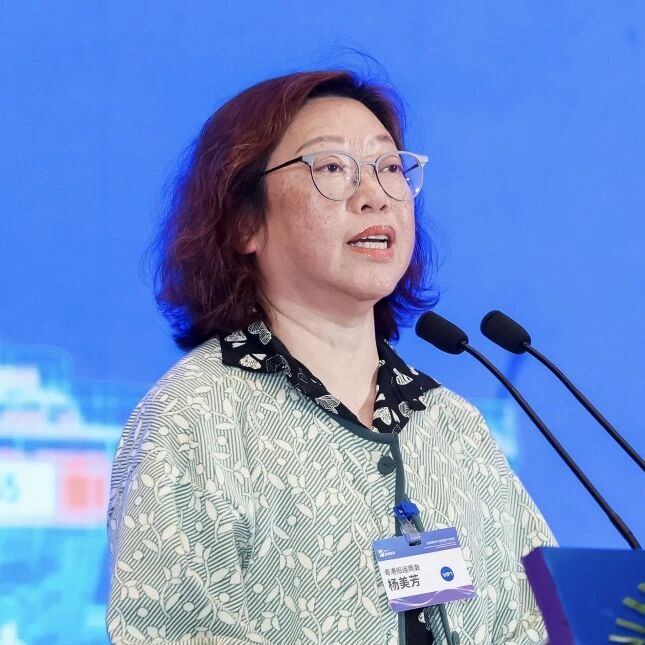 |
| Yang Meifang, Vice President of Guangdong and Hong Kong Feeder Association |
| Through close and sustained cooperation, the Guangdong and Hong Kong Feeder Association and YANTIAN have worked together to enhance port operating efficiency and service competitiveness. By precisely planning shipping services and optimising resource allocation, both sides have achieved faster vessel turnaround. In response to evolving market dynamics, we have also introduced a series of smart and efficient service solutions, including port alliances, digital bills of lading, and paperless customs clearance, further strengthening the global appeal of YANTIAN and the Greater Bay Area port cluster. Meanwhile, continued progress in green port development and smart logistics has further consolidated the core advantages of the Shenzhen–Hong Kong port clusters. |
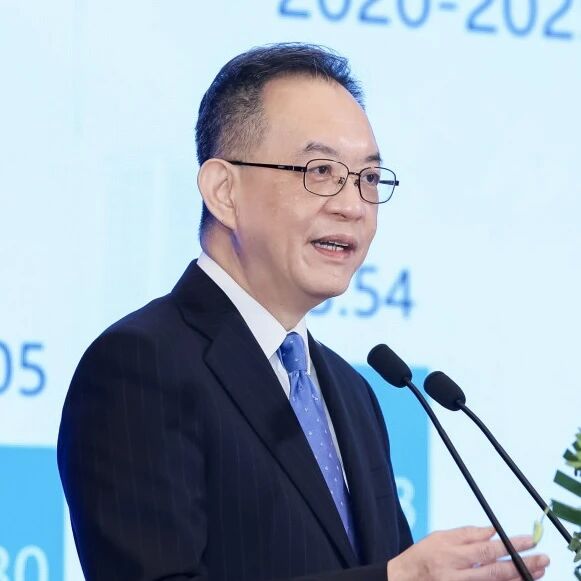 |
| Lawrence Shum, Managing Director of Hutchison Ports YANTIAN |
| As a vital node in global industrial and supply chains, YANTIAN fully recognises its responsibilities and remains confident in its mission. We will continue to support our partners with world-class port facilities, round-the-clock reliable services, and continuously innovative solutions, serving as a steadfast and trusted backbone. YANTIAN will further strengthen its role as a bridge between governments, Customs, enterprises, and industry associations, actively listening to industry voices, and contributing forward-looking insights and proposals. As we proceed to the year of APEC 2026, under the leadership of governments at all levels and port supervisory authorities committed to reform, innovation, and responsibility, YANTIAN stands ready to work side by side with all stakeholders as a most reliable partner. Together, we will seize the opportunities presented by APEC, focus our collective efforts on high-quality development, and realize the shared vision of "hosting a successful event to uplift a city," moving confidently toward a brighter and more prosperous future. |
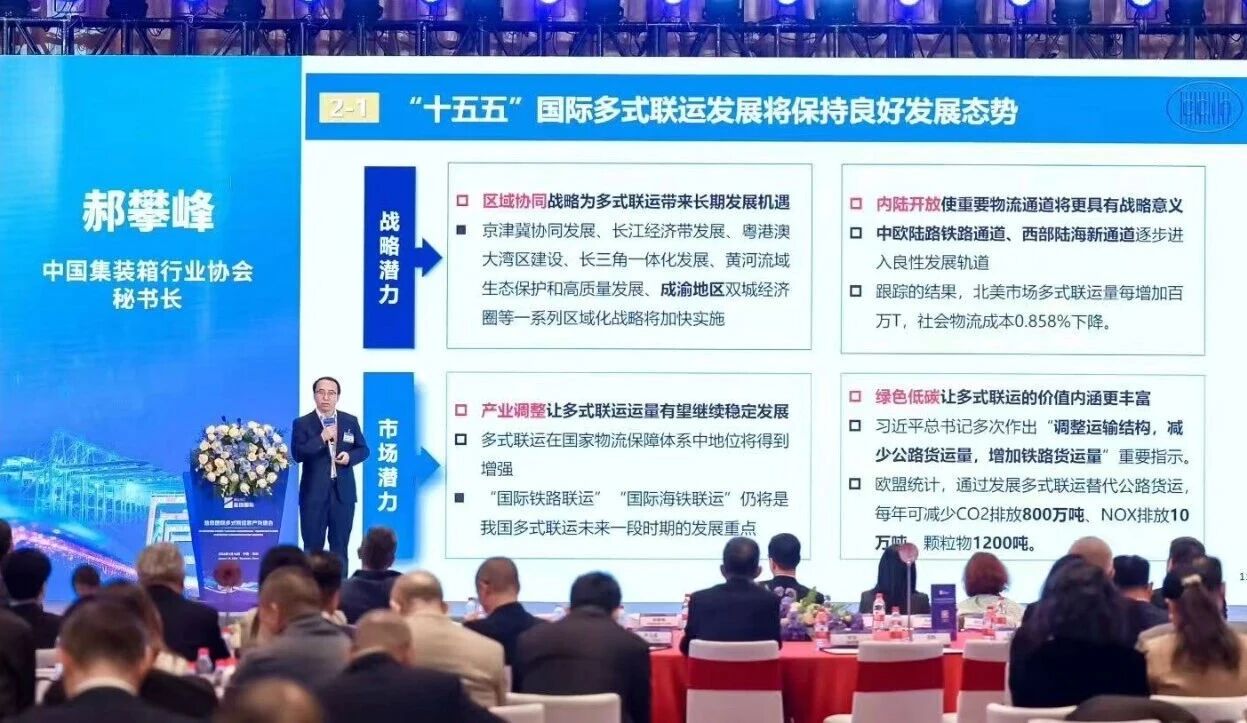
At the event, Hao Panfeng, Secretary General of the China Container Industry Association, delivered an in-depth analysis of industry trends and outlined the key priorities for the high-quality development of China's intermodal transport system during the 15th Five-Year Plan period. He noted that in 2025, national port rail-sea service throughput reached 15.2 million TEUs, marking a 13.9% year-on-year increase and surpassing the ten-million-TEU threshold for the first time. Intermodal transport has become a critical pillar of China's economic circulation. After progressing through phases of market cultivation and rapid expansion, the sector entered a stage of quality enhancement and scale growth during the 14th Five-Year Plan period. Looking ahead, the strategic focus will centre on high-quality development, with a landscape led by international rail-sea service and international rail services, significantly advancing trade facilitation.
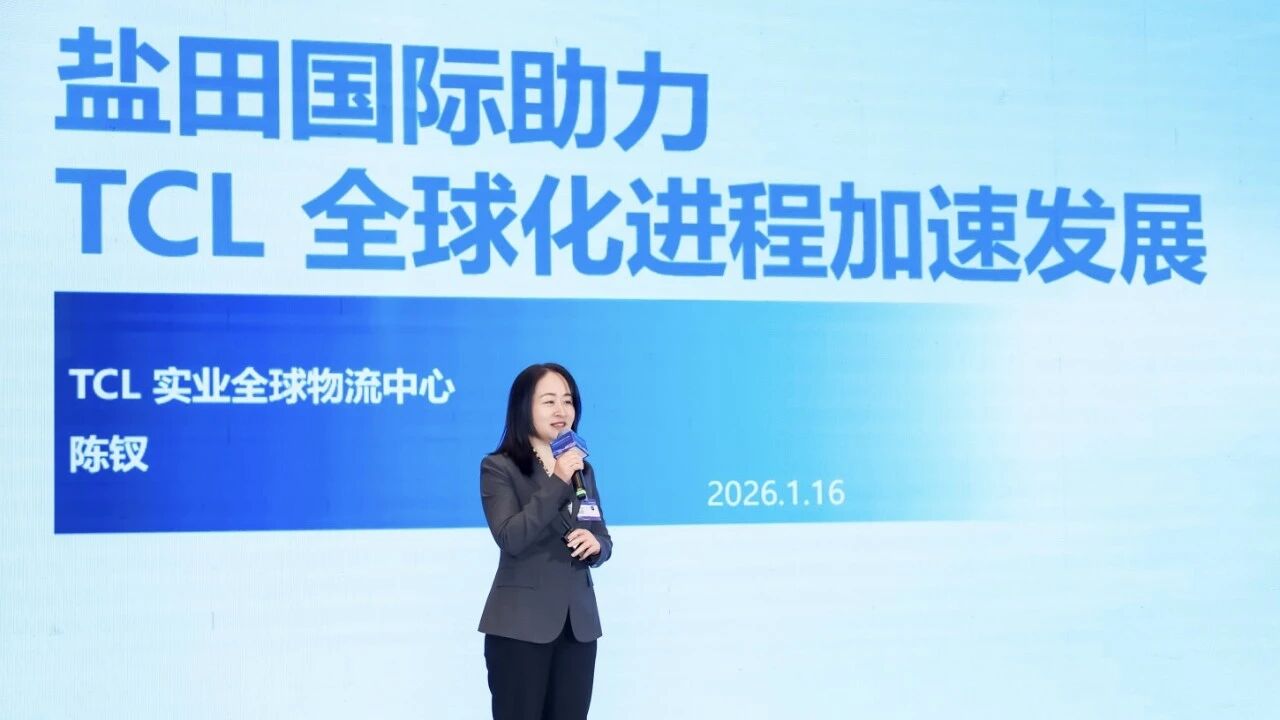
Chen Chai, Deputy General Manager of the Global Logistics Centre at TCL Industries, shared first-hand operational insights. TCL's strategic objective is to achieve global leadership across three core sectors—smart terminals, semiconductor displays, and new energy photovoltaics. Achieving this vision relies not only on sustained technological innovation, but also on deep integration with global markets, where strong support from an international hub port is indispensable.
Currently, 40% of TCL's national export volume is shipped via YANTIAN. Leveraging YANTIAN's continuously strengthened rail-sea service system, along with its expanding network of inland ports and port alliances, TCL has effectively overcome long-standing cross-regional logistics challenges. With multiple manufacturing bases located inland, TCL's production footprint aligns closely with YANTIAN's inland port and port alliance network. Through direct experience with YANTIAN's efficient and seamless multimodal services, TCL has come to regard the port's intermodal transport system as a robust and reliable logistics backbone underpinning its global operations.
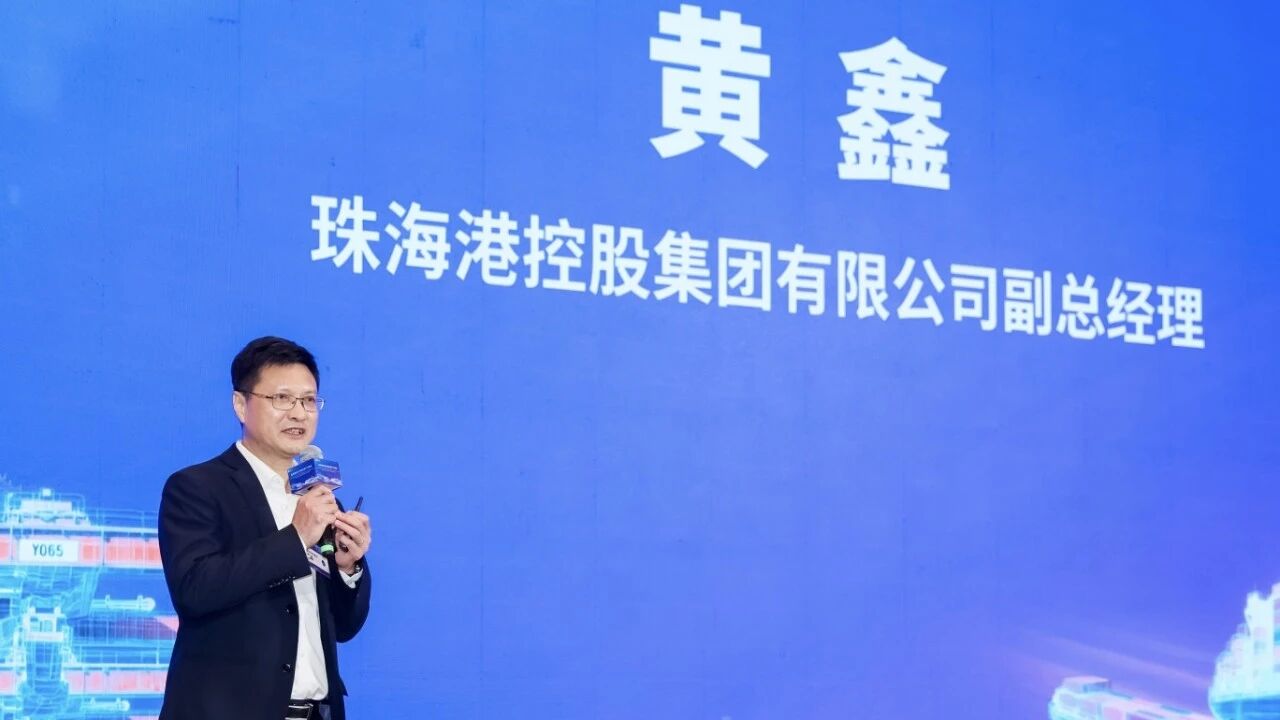
Huang Xin, Deputy General Manager of Zhuhai Port Holdings, addressed key logistics challenges faced by exporters and the corresponding solutions. The jointly developed Gaolan–YANTIAN port alliance model moves port service functions upstream, enabling exporters to complete empty container return at Gaolan Port—deemed equivalent to delivery at YANTIAN—and to proceed with customs declaration in advance. This model effectively mitigates the time constraints, congestion, and road safety risks associated with traditional trucking. For special cargo such as dangerous goods, the two parties have also deployed dedicated, fully qualified feeder capacity to ensure transport safety.
This collaboration has helped customers reduce overall logistics costs by approximately 15–20%. Through process optimisation and contingency mechanisms, it has also strengthened supply chain resilience and responsiveness, allowing for flexible and efficient responses to disruptions such as vessel schedule changes. Since the service's launch in 2022, cargo volumes have increased steadily, establishing it as a key logistics corridor linking western Zhuhai with global markets and effectively addressing export logistics challenges for specialised industries including electric vehicles and hazardous chemicals.
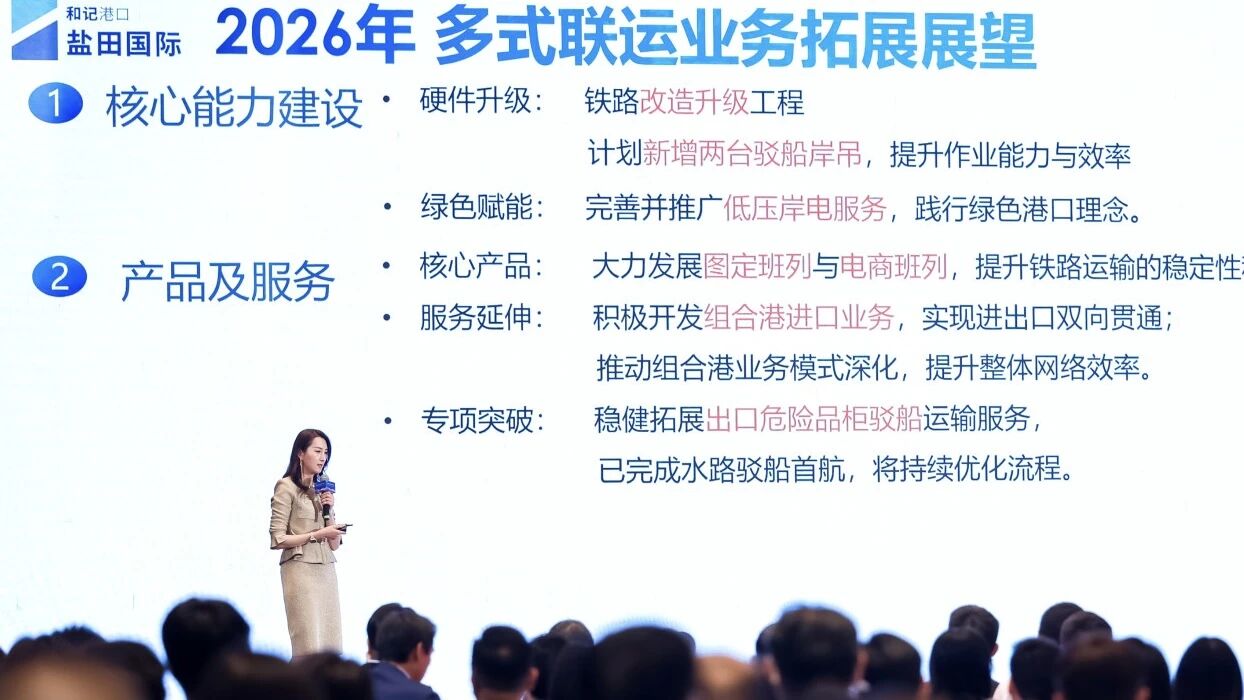
Crystal Pang, Deputy Commercial Manager of Hutchison Ports YANTIAN, delivered a business briefing reviewing the port's intermodal transport performance in 2025 and outlining new opportunities for collaboration in 2026. To date, YANTIAN has developed a comprehensive intermodal network comprising 30 inland ports, 36 rail-sea services, 15 port alliances across the Greater Bay Area, and 17 feeder services. The successful operation of Chongqing-Shenzhen-Hong Kong Scheduled Rail-Sea Service and Chengdu-Shenzhen-Hong Kong Scheduled Rail-Sea Service has provided inland foreign trade enterprises with stable, efficient, and low-carbon logistics channels, enabling mutually beneficial development across inland regions, Shenzhen, and Hong Kong.
YANTIAN has long been committed to advancing Shenzhen–Hong Kong collaboration. Feeder services between YANTIAN and Hong Kong have been in continuous operation for more than 32 years, with six daily sailings. Container volumes have maintained sustained year-on-year growth, and following a new record in laden container throughput in 2024, traffic continued to achieve double-digit growth in 2025.
 Looking ahead: Riding the momentum of multimodal transport
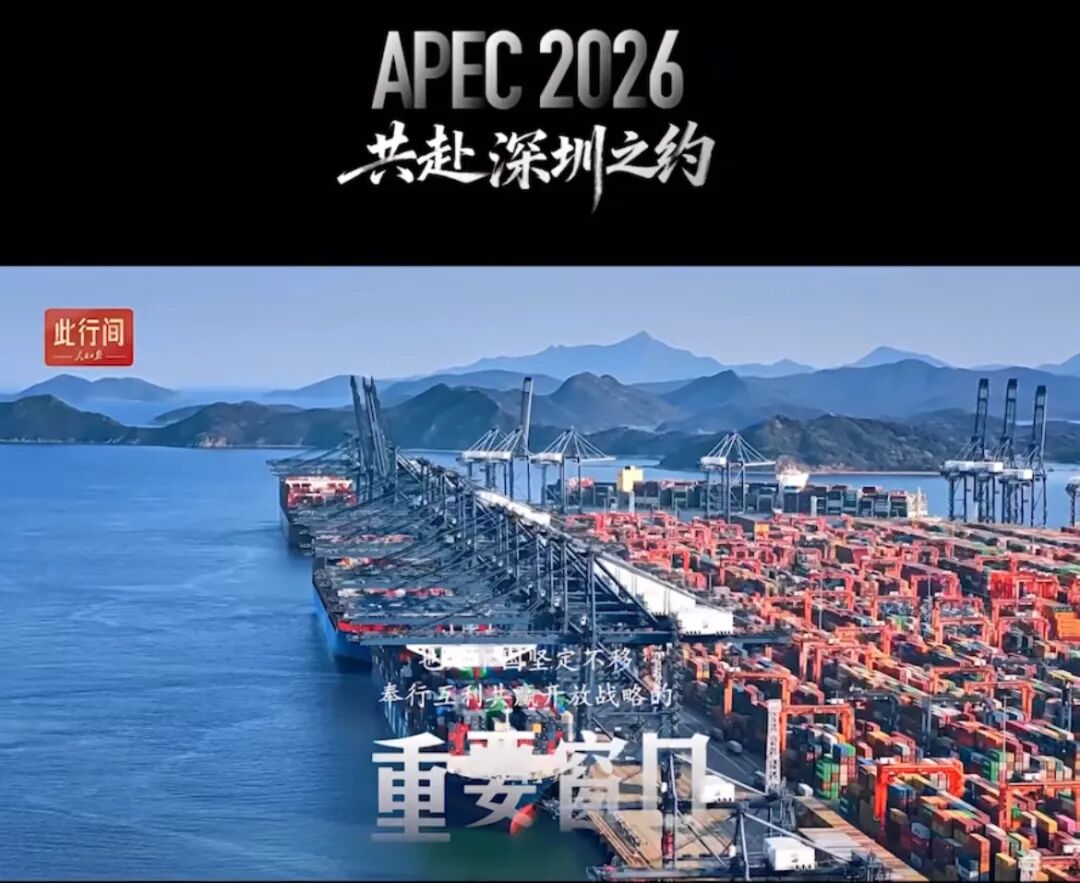
As a key gateway for China's unwavering commitment to an open, mutually beneficial development strategy, Shenzhen serves as an important window to the world.
Leveraging the natural deep-water advantages of the world's largest single container terminal, together with a dense global shipping network of about100 weekly services, YANTIAN is advancing on multiple strategic fronts. On the infrastructure side, YANTIAN continues to upgrade port facilities, deepen strategic coordination with Hong Kong's Kwai Tsing Port, and integrate rail services to further extend inland logistics networks, strengthening hub capacity in support of China's new development paradigm. In parallel, YANTIAN is accelerating digitalisation and intelligent transformation, working closely with port supervisory authorities, railway operators, shipping companies, and other stakeholders to enable seamless system interoperability and data connectivity. Through the development of scheduled trains, e-commerce rail services, and port appliance import operations, YANTIAN is building efficient, end-to-end logistics solutions under the model of "one single booking, worry-free delivery throughout the journey." Guided by a commitment to green and high-quality development, YANTIAN is also increasing investment in low-carbon technologies, including shore power facilities and the world's largest battery-swapping station. By fully leveraging the low-carbon advantages of rail-sea services, YANTIAN aims to showcase the "YANTIAN Model" of green and smart logistics to the Asia-Pacific region during APEC China 2026—contributing robust hub capabilities, innovative services, and strong environmental stewardship to the development of a world-class port cluster in the Greater Bay Area.